Why Japan Is Important For Your Money
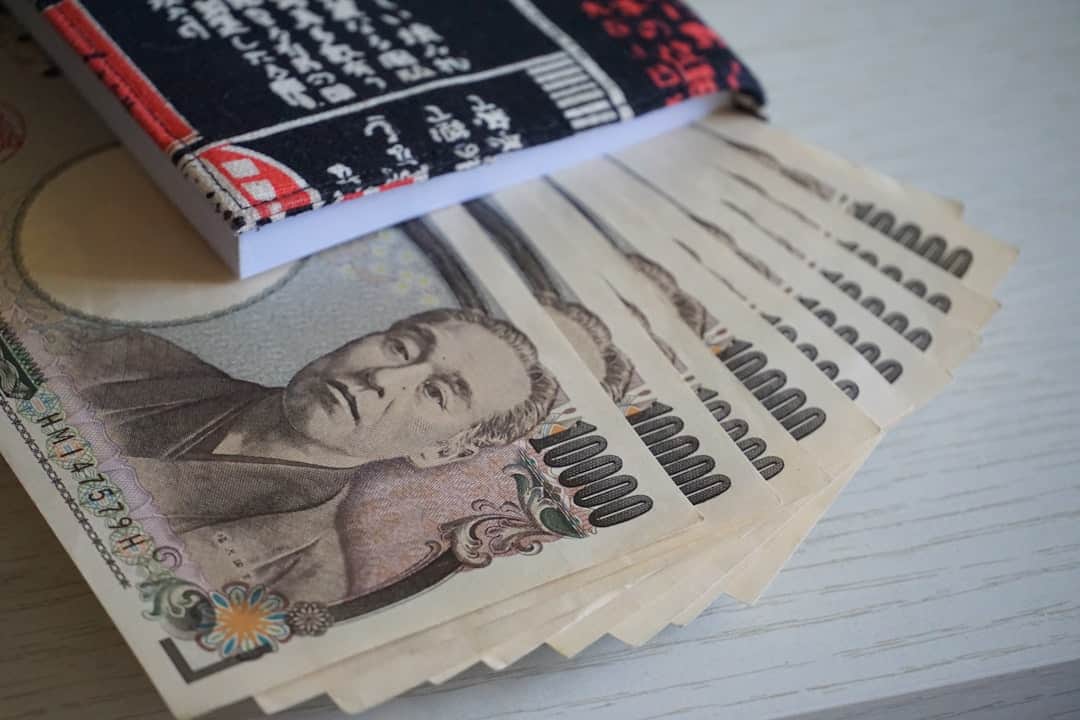
We’ve all heard Donald Trump’s vision for a rebirth of American manufacturing. Although I’ve never been quite clear on the true intent behind his tariffs (there are many, often competing, stated objectives). But one thing I do know is that he wants a weaker U.S. dollar. He thinks this will boost American manufacturing, making our goods here in the U.S. cheaper (and therefore more competitive) abroad.
To him and Treasury Secretary Scott Bessent, it may seem reasonable to help support the yen and sell the dollar. But here’s the problem — Japan’s financial crisis might actually have the opposite effect of hurting American manufacturing.
As Japanese interest rates rise, trillions of dollars borrowed cheaply in yen will need to flow back to Japan. To make that happen, Japan may need to sell U.S. Treasuries (as the largest foreign holder), pushing U.S. interest rates higher, thereby strengthening the dollar.
A Japanese fiscal crisis some 6,000 miles away could easily sabotage Trump’s aim for a weaker dollar. I’m calling this the “Tokyo Trap.”

The Tokyo Trap and the illusion of control
At first I didn’t think this would be a trap. I thought the Greenland tensions last week at Davos might escalate the existing Japanese fiscal issues into a full blown crisis. There wouldn’t be a need to “trap” anyone in that environment.
But Trump backed down and agreed to a “NATO Framework”, TACO-ing his way out of calls to take control of Greenland through the use of force.
This Davos deescalation calmed markets not only in Japan and the U.S., but globally. Bond yields were rising and the stock market had dipped, which likely pressured Trump to back off more than any other factor. I’ve been saying this since the start of his second term — bond markets may be the best check on executive power that we have in America. As yields rise, life simply gets more expensive which is terrible for a president who won largely on “affordability.”
Now that the bond seas have calmed since Davos, the Bank of Japan is anticipating its next task: defending against the fiscal policies of the incoming government. It wants to prove that it’s broken the back of a 30-year deflationary mindset and is entering a golden age of “reflation.” If the U.S. government wants a weaker dollar, it might see self-interest in stabilizing the yen against the dollar.
After all, markets are relatively calm now. The S&P 500 is stable. But underneath it all is the yen carry trade, which has been the world’s largest source of cheap liquidity for about 30 years. The Bank of Japan is slowly dismantling it because it’s out of options (for the mechanics of that trade, see further below).
Which is why supporting its actions isn’t a pathway to affordability in America. It’s a trap.
“Reflation” is a code word for “fiscal failure” with global implications
The official narrative from the Bank of Japan, optimistic equity analysts, and bullish financiers is that Japan desperately needs inflation. You might think this is odd if you live in America or the West because we seem to be in an unending fight with that pesky “I” word.
From Japan’s perspective, however, their lack of inflation has led to little growth. It has led to a cheap currency the world has used to borrow at almost 0% (almost free!) to then use to invest elsewhere for higher returns (which is the essence of the carry trade).
So what’s the harm with more capital repatriation, corporate reshoring, and higher wages domestically? It could mean the end of what has been called in Japan the “Lost Decades.”
And to be fair, this has some credibility on paper! Japan’s GDP forecasts were recently revised up and core inflation is finally sticky at around 2.5%. But it also ignores the structural math of Japan’s debt. Because let’s be real — Japan’s entire fiscal structure was build for ~0% interest rates.
At ~250% debt-to-GDP, every 1% increase in interest rates eventually adds roughly 8-10 trillion yen to the annual interest bill. This makes the “fiscal failure” conclusion far more likely because the cost of servicing Japan’s “reflation success” is higher than the economy can afford.
I’ve seen what happens when my 4-year-old son has too much sugar. It looks like organic energy as he bounces from one wall to the next. But that temporary high is almost always followed by a massive crash.
The sugar in this case is Prime Minister Takaichi’s consumption tax cuts. It’s billed as “reflation.” But in reality it’s a hidden tax to fund government spending without direct taxation. Which could lead to higher inflation, but also currency devaluation and loss of trust in the monetary system.
Just look at what happened to Liz Truss.
The “Truss” Test
The Truss government tried unfunded tax cuts across the pond in 2022. And it was also done in a reflationary environment. It didn’t end well, just as it likely won’t for Prime Minister Takaichi. Because as the kids say, “The math just ain’t mathing.”
Japan’s Ministry of Finance raised its “assumed interest rate” to 3% for its 2026 budget. But that means Japan is now spending nearly a quarter of its budget on interest alone.
That’s like you earning $100K but spending $25K on credit card interest before you buy groceries. Don’t tell me that’s sustainable.
These are the exact conditions the bond market rebelled against in the UK under Truss. And it led to a massive selloff in UK gilts (government bonds) as investors lost confidence in who was paying the debt.
Yields spiked, the pound crashed, and Truss’s premiership was crushed under the weight of runaway costs (remember, so much of life is tied to bond market rates — mortgages, credit cards, private loans, etc.).
The market has a name for these traders who sniff out fiscal failures — bond vigilantes. They punish governments that spend beyond their means by selling bonds, which drives yields up and borrowing costs through the roof. That’s what killed Truss’s government.
Now they’re circling Japan. They’ve been sniffing the Japanese bond market for a few years as yields have steadily risen. A once thought to be “dead” market is now a bit yippy, with 30-year yields around 3.8%.
And there’s a simple, likely reason why these yields are rising. It’s not because of Greenland. Although those provocations didn’t help. It’s likely because investors are slowly losing trust in the Japanese government’s solvency.
The carry trade exit and the global impact
Here is how the carry trade has worked for the past 30 years:
- Borrow yen at nearly 0% interest in Japan
- Convert to dollars
- Buy U.S. stocks like Nvidia or bonds with coupons around 4-5%
- Pocket the difference
This trade was a free lunch for years provided two conditions stayed the same: (i) Japanese rates remained ~0%; and (ii) the yen stayed weak or at least stable.
But now both of these conditions are breaking. Japanese rates are steadily rising and the yen is strengthening.

Should these conditions continue to break, all of that “free” borrowing for years starts to cost money. If investors want or need to repay loans (e.g., margin calls) and convert back to yen, they’ll have to sell U.S. assets.
And if investors do this en masse, or even in sizable numbers, U.S. markets will feel it. So this could inevitably have a domino effect of the repatriation of capital to Japan and corrections in U.S. equities.
Which is why the U.S. impact is so acute when it comes to Japan’s economy. Trump and his administration may want a weaker dollar to supercharge American manufacturing and exports, but a stronger yen forces these carry trade domino effects.
And potentially the biggest domino is the selling of U.S. Treasuries. Japan is the largest holder of Treasuries in the world. A stronger yen would likely force Japan to support the move by selling out a sizable chunk of its position. This would put pressure on U.S. yields, stifling the very manufacturing boom Trump desperately wants.
Make free money great again
This may be the end of the “free money” era. While some may argue that Japan is leading a reflationary charge, what it’s really showcasing is what happens to highly indebted countries that can’t handle their debt loads.
There will likely be increasingly disorderly moves in USD/JPY (dollar/yen) rates and a paradigm shift where volatility becomes the new baseline for global equity and bond markets. Add in geopolitical uncertainty and you have a bubbling stew with few areas of safety.
Which is likely why markets have experienced a massive flight to gold, silver, and other precious metals (have you seen copper!). These areas may have more room to run as fewer investors now retreat to the dollar in periods of instability.
If you own U.S. tech stocks like Nvidia, understand that these benefited from decades of cheap Japanese yen flowing into U.S. markets. If that era dries up, volatility is coming.
If you’re watching the dollar, don’t assume that Trump/Bessent can weaken it through policy alone. They’re concerned about this yen carry trade unwind, or at least I hope they are.
In the meantime, I’m watching the USD/JPY exchange rate (if it breaks 140, expect the carry trade unwinds to accelerate), the 10-year JGB yield (if it hits 2%+, expect a Truss-like moment), and further Bank of Japan intervention (which would lead to more U.S. Treasury sales as they support the yen).
This Tokyo Trap isn’t just about Japan. It’s about the end of the free money era that powered global markets since the 1990s.
And it’s bigger than any one person. No matter what they try to tell you.
Note: I may be critical of this Japanese monetary/fiscal policy, but I love many other Japanese policies, especially as they relate to zoning. Check out this essay and my short film on that topic if you’re interested. And thanks for being here. For more, subscribe to my newsletter below:


0 Comments