Le Creuset Bread Oven Review and Why Bread in America Is So BAD
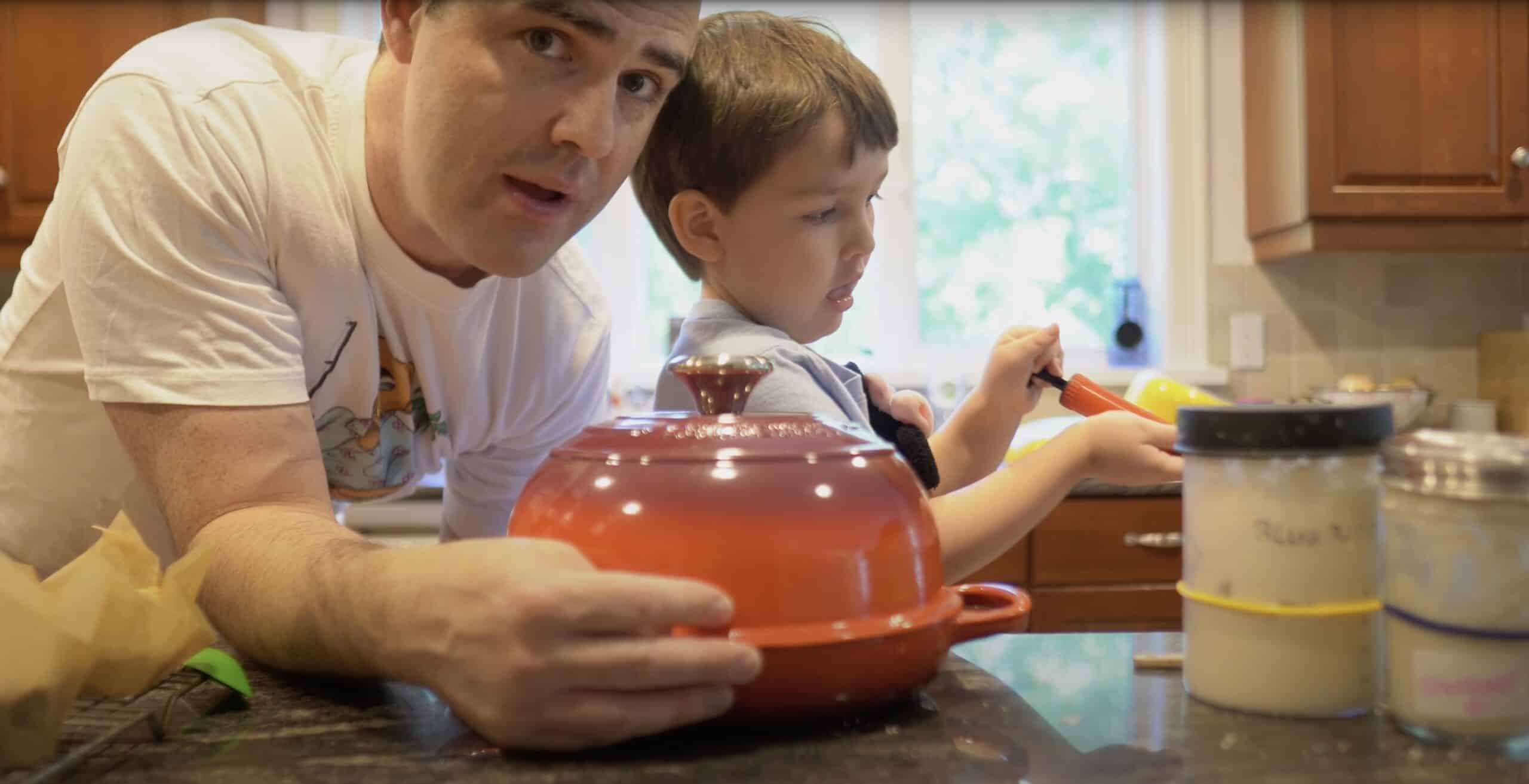
I’m about ten months into my sourdough journey, and I’ve learned a lot—not just about fermentation, hydration, and proofing, but also about why bread in America tastes and feels so different from bread in the rest of the world. Recently, I started experimenting with a Le Creuset bread oven, and in this post, I’ll share how it went, what I learned, and whether it’s worth the investment.
Reviving My Starters After a Month Away
Before I could even bake, I had to see if my sourdough starters survived. After four weeks in the fridge (thanks to some extended travels in Asia), both my blueberry and cranberry junior starters were sluggish but alive (note: the starters don’t contain these fruits; my son named them).
If you’ve ever neglected a starter, you know the drill: discard half, feed with a 2:1 ratio of flour to water, and watch for bubbles. It took a little trial and error, but I got both revived enough to bake.
Tip: Don’t just toss the discard. Fry it up with a little oil, salt, and pepper, and you’ve got savory sourdough “pancakes”that my family devoured while waiting for the real bread.
Why I Bake My Own Bread
My sourdough obsession started when I looked at the ingredient lists on American bread—even at supposedly “clean” places like Whole Foods. Additives like riboflavin and niacin are included to replace nutrients lost during flour refinement, and preservatives keep loaves shelf-stable for weeks.
By contrast, traditional sourdough uses just four ingredients: starter, water, flour, and salt. That’s it. No shortcuts. No banned chemicals like potassium bromate (still legal in the U.S. but outlawed in much of the world).
It’s not just nostalgia or foodie snobbery. The bread aisle in America reflects a culture of convenience over quality. Baking at home is my way of pushing back—and reconnecting with the way bread has been made for centuries.
A Simple Sourdough Formula
Here’s the formula I’ve been sticking to:
- 100g active starter
- 375g warm water
- 9g Himalayan pink salt
- 440g bread flour
- 60g spelt flour (or buckwheat/whole wheat)
Mix, autolyze for an hour, stretch and fold, then bulk ferment 8–12 hours. After shaping and a short bench rest, I do a final cold rise in the fridge for 30 minutes to 8 hours (depending on my schedule).
Bread making is arguably more about feel than formula. Listen to the dough.
Wet your hands if the dough is dry, let it rest longer if it needs more air, and don’t panic if your shaping isn’t perfect. The dough will tell you when it’s ready.
Lessons From French Bread Culture
One question that’s haunted me since starting this journey: why is American bread culture so different from France’s?
When I first visited Paris in 2010, I was struck by the aroma of fresh bread spilling out of every boulangerie at 6 a.m. Bread wasn’t just food—it was life. For centuries, the French depended on bread for up to 80% of their daily calories. When bread prices spiked in the 18th century, people rioted. Bread was sacred.
In America, bread became industrialized. We traded freshness for shelf life. Unless there’s a cultural shift, it’s hard to imagine bread ever inspiring the kind of passion it does in France.
But I hope to do my part in making that American cultural shift happen. We should be demanding more of our bread and food in general.
Baking in the Le Creuset Bread Oven
This time, I took the advice of commenters and preheated my bread oven inside the main oven at 450°F (previously – in the video above – I did not preheat my bread oven). That extra heat and steam made a huge difference in oven spring.
The bake went like this:
- 20 minutes covered
- 20 minutes uncovered
Many recipes recommend longer, but I find my oven runs hot. At 40 minutes, the loaf had a deep golden crust and an airy, well-structured crumb. The cast-iron base left a beautiful imprint and evenly baked bottom (with a nice circular design).
Final Verdict: Is a Bread Oven Worth It?
Absolutely. The Le Creuset bread oven has become one of my favorite kitchen tools. It produces consistent loaves with great rise, crisp crusts, and even bakes. Preheating it was a game-changer.
More importantly, baking at home has deepened my appreciation for real bread. We may not have the same bread culture as France here in America, but that doesn’t mean we should settle for loaves pumped with preservatives.
Bread is one of life’s simple pleasures. If you’re willing to invest a little time—and the right tools—you’ll be rewarded with something far more satisfying than anything from the grocery aisle.
Your Turn: Have you tried baking with a bread oven? Do you have tricks for scoring or shaping that work better than mine? Drop a comment—I’d love to learn from your experience.
And consider subscribing to my newsletter so you don’t miss an update, whether about bread or culture at large.


0 Comments