‘Common Sense’ Turns 250, and We’ve Lost It Today
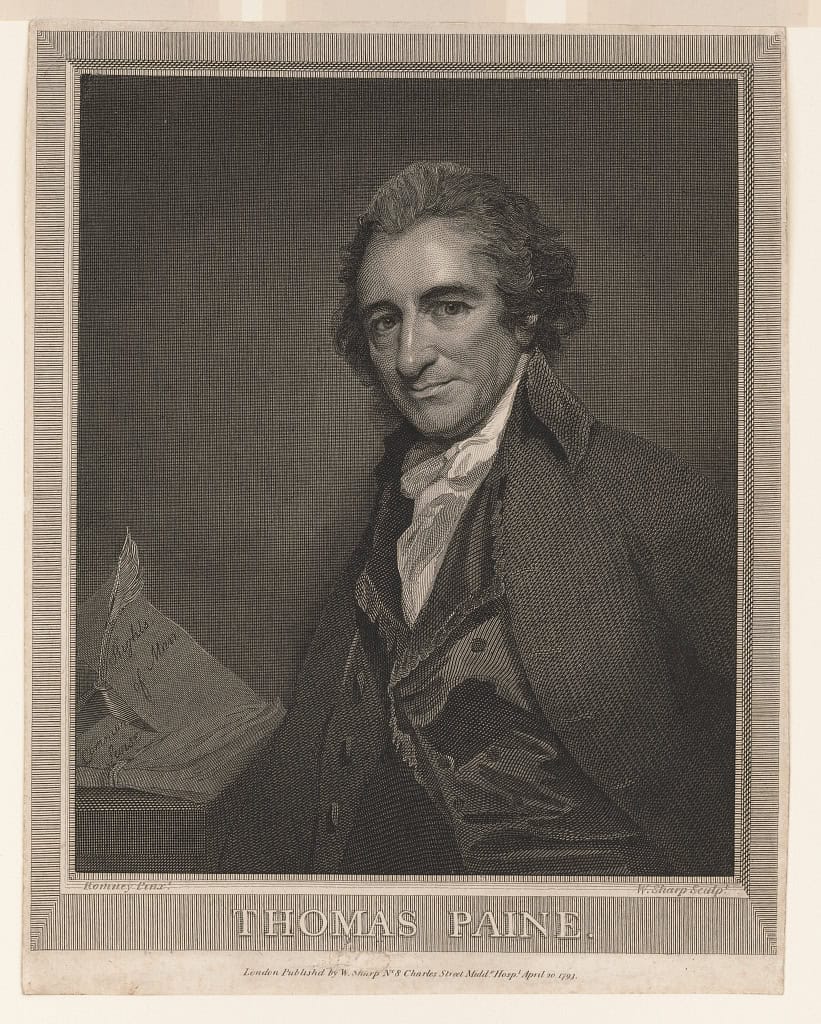
“Time makes more converts than reason.”
This is how Thomas Paine concludes the first paragraph of Common Sense, one of the first forms of viral media in the American colonies.
250 years ago, this anonymous pamphlet changed history. It sold 500,000 copies in a nation of 2.5 million. And it didn’t need social media or Amazon vans to do it.
Just one writer with a printing press, conviction in America, and great timing. When Paine originally published Common Sense in January 1776, most Americans still wanted reconciliation with Britain. Six months later, they declared independence.
So what changed? And what can Paine’s success with Common Sense teach us about persuasion in moments of institutional crisis?
Especially when common sense itself feels increasingly contested.
Why ‘Common Sense’ persuaded
What’s the best way to reach ordinary people with busy lives and limited attention spans? Use simple language and transform abstract ideas into concrete examples that feel urgent and personal.
Then create a permission structure so that otherwise “radical” action appears reasonable.
None of this works if timing and distribution fail. They matter as much, if not more, than the content itself.
Thomas Paine understood all of this in January 1776.
“The cause of America is in a great measure the cause of all mankind.”
This is plain language supercharged with emotional urgency. It’s filled with anti-elitist rhetoric that not only persuades the commoner, but makes them laugh too. Like when he called England’s first king, William the Conqueror, a French bastard.
“A French bastard landing with an armed banditti, and establishing himself king of England against the consent of the natives, is in plain terms a very paltry rascally original.”
Paine said this in the context of highlighting the absurdities of monarchy. How insane it was to elevate the hereditary succession of one lineage, especially when the original king wasn’t even technically English!
He also argues against the absurdities of maintaining the same connection with Great Britain because “America hath flourished under her former connection.” But Paine does it in a concrete way, morphing a colonial abstraction into real life examples.
“We may as well assert that because a child has thrived upon milk that it is never to have meat, or that the first twenty years of our lives is to become a precedent for the next twenty.”
Have a seat at Uncle Thomas’s dinner table and listen to his common sense. That’s the vibe I was getting as I read through this pamphlet, which I honestly hadn’t read since my political science undergraduate days.
It read more powerfully today than it did over a decade ago. Paine’s rhetorical arc against monarchy and for self-government leads the reader to a place he or she may not otherwise go — when reform fails, revolution may be necessary.
He gives the reader permission to think that once unthinkable thought. And he did it with a distribution strategy that was maybe even more impressive than the message itself, which is saying something.
While the printing press had been around in the American colonies — just ask one of my favorite printers, Benjamin Franklin — it hadn’t been used for political pamphleteering at scale. Thomas Paine changed that.
He kept the pamphlet relatively short at 50 pages. He priced it low so it would spread, not turn a profit. And importantly, he signed it as an “Englishman”, not as Thomas Paine.
He wanted the ideas to elevate above any one person.
Paine did all of this amidst an institutional crisis in the American colonies. Common Sense demonstrated how strong and well-communicated ideas can undermine authority when legitimacy fractures.
The institutional crisis Thomas Paine faced
When Paine published Common Sense, the British system was still strong, but it was losing credibility. Britain was still a dominant global empire that had the most powerful navy in the world. Its administrative state was first class.
Given that context, it’s easy to forget how improbable it was for Thomas Paine to help topple a still-functional system. While the king sat at the top of government, there was still a Parliament back in London along with colonial assemblies with limited autonomy.
But there was still law and order. It felt increasingly arbitrary to the American colonists like Paine, but it’s not like he was challenging a collapsing regime.
This was even before the famous grievance, “No taxation without representation.” The deeper issues that Paine described in the early pages of Common Sense were that decisions affecting the colonies were made thousands of miles away by people with no lived stake in the outcomes, and through legalities that were opaque or unfair to ordinary colonists.
Paine argued that the English Constitution was flawed for America’s purposes. Or as he irreverently put it:
“And as a man, who is attached to a prostitute, is unfitted to choose or judge a wife, so any prepossession in favour of a rotten constitution of government will disable us from discerning a good one.”
Pull up a stool next to Thomas at the bar rail.
What he was describing here is classic institutional decay in a colorful concrete example. The authority figures back in London were not representative of the people.
But instead of focusing on any one policy, Paine directed his ire at the symbol above it all — the Crown. The monarchy.
By undressing the king and his legitimacy, he showed how monarchy was irrational, how hereditary power violated common moral intuition, and how tradition alone was not a sufficient justification (remember that children’s milk quote above?).
Many people in the American colonies at the time privately thought this, but they hesitated to publicly voice these ideas. The reasons may remind you of America in 2026 — economic dependence on the existing system, fear of chaos, and social status.
Remember, the battles of Lexington and Concord had already happened in April 1775. The Boston Massacre had occurred in 1770. Armed conflict had begun with Britain, but independence was still widely considered unthinkable.
Paine made that separation thinkable through plain language free from legalistic prose. He wasn’t constrained by elite caution. He plainly said what others could not.
“Of more worth is one honest man to society and in the sight of God, than all the crowned ruffians that ever lived.”
– Thomas Paine
What this means for America and the world today
When legitimacy collapses, the simplest story usually wins. Institutions have cracked around the world, from the checks and balances we’re supposed to have in America to the cohesiveness of the European Union.
Many elites with power insulate themselves from accountability and consequences. They enjoy private enrichment through public office.
They insulate enforcement from accountability.
The social contract is increasingly fraying.
The core lesson to draw from Thomas Paine and Common Sense is not WHAT to think, but HOW persuasion works when institutions lose legitimacy.
How we must have more clarity over cleverness because simple ideas spread faster than the more complicated ones.
How logic must infuse emotion to force people to think with their heart, in addition to their head.
How we must create better permission structures so people feel, “It’s OK to think this.”
How distribution is paramount — the best ideas poorly distributed always lose to well-distributed mediocre or even weak ideas.
How timing is everything. Thomas Paine didn’t force a revolution. He simply articulated what people already felt but were hesitant to say.
The platforms may be different 250 years later, but the dynamics are the same. When institutions lose legitimacy, ideas matter more than ever.
Whoever best understands how to spread them inevitably shapes what comes next.


0 Comments