Banning What Beats Us
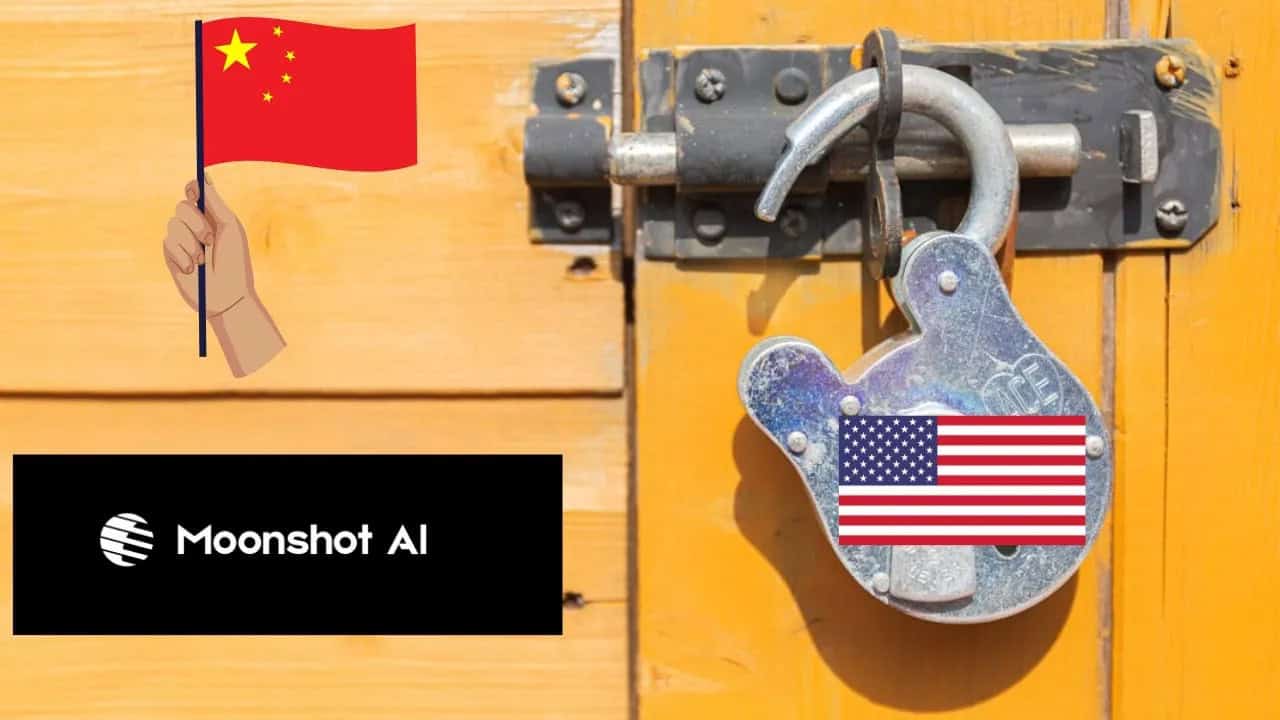
This essay was originally distributed via my newsletter.
When I was in London a couple of weeks ago, I saw sleek, compact cars I had never seen before — they were BYDs. Most of my fellow Americans probably wouldn’t recognize them either because we priced them out of existence (effectively banning them). Chinese electric vehicles face a 100% Section 301 tariff at the U.S. border.
We also ban Chinese-developed software and hardware from connected vehicles. Which is probably why BYD never seriously considered even trying to enter the U.S. passenger car market. They felt the chilling effect of likely laws before they even existed.
It’s fairly easy to ban a physical good like a car. It typically arrives at a port, on a ship, and with a customs entry and a declared price. So we can hit it with tariffs, antidumping duties, import bans, entity listings, the works.
That’s if we feel threatened. BYD cars by many accounts are great vehicles. They’re also cheap and would give U.S. consumers a more affordable alternative to Tesla.
We also constantly cite national security concerns, but that’s difficult to do for everything that comes from China. Solar panels are the perfect example. We banned these from China not because they were national security threats, but because we were concerned about competition. But that still didn’t stop the cost collapse in that market.
And we can’t forget about TikTok. This is the case that previews everything that’s about to happen with Chinese AI. Congress passed a divest-or-ban law with overwhelming bipartisan majorities, the Supreme Court upheld it unanimously, and then President Trump decided not to enforce it. Now a joint venture has materialized to comply with the divestiture requirements, but it should not go unnoticed that the strongest Chinese ban that America ever attempted went an entire year unenforced.
Do you notice the pattern here? First, almost everything that comes from China gets the national security concern label, but we’re most aggressive about products that threaten American industries. And second, the bans that work best are those against physical objects and market access.
TikTok’s ban worked for one weekend when app stores complied, only to be suspended by a presidential memo. Which shows how software doesn’t break on enforcement, but on will.
There’s another reason to be skeptical of banning Chinese AI. Models like the one recently released by the Moonshot AI founder I wrote about are open models. If you know anything about America’s history fighting open source, you’ll know we’ve lost almost every battle.
Yes, the iPhone and Windows desktop are closed gardens, but open source won the infrastructure layer in America, and that’s the one that really matters. Look at essentially any server and you’ll find Linux powering it. And that’s true for practically any supercomputer on Earth.
The same is true for the internet. And programming languages. The substrate of computing is open, with closed tech built on top of it.
AI model weights are the same substrate. They are layers that enterprises can build on, which is precisely the layer where open source has won every previous contest in tech history.
I’m a child of the 1990s who witnessed Microsoft fighting off Linux and the U.S. government itself contemplating what it’s deliberating now — whether it can treat published code as a controlled good.
Did you know we tried treating encryption software as a munition under export-control laws? That was until a federal court ruled that source code is speech protected by the First Amendment and the government backed down. So the closest legal precedent for controlling published model weights is a fight the government retreated from 30 years ago.
Which brings me to July 2026, Moonshot AI, and its open model Kimi K3.

Kimi K3 cannot be stopped
Kimi K3 is the largest open-weight system anyone has ever built — 2.8 trillion-parameter model and a million token context window.
For those who don’t speak AI tech, Kimi K3 is a beast. It’s not the best model in the world (on most overall rankings it still trails the top American systems), but it’s close and more importantly, free. “Close and free” should terrify a U.S. business model built on “best and metered.”
And we’re no longer debating how far behind Chinese labs are from American ones. Which is why you’re seeing hysterical articles like this one appearing in the Wall Street Journal, with American tech CEOs sounding the alarm on Chinese AI.
Why the alarm bells? Because Moonshot’s API runs at roughly a third of the cost of Anthropic’s top-tier pricing, which isn’t a bloodbath for American AI labs, but that bloodbath could be around the corner.
On July 27th, Moonshot AI plans to publish K3’s full weights. Which means that anyone with the hardware to run it can access frontier-adjacent AI intelligence at basically zero cost. And keep in mind that Moonshot ran out of GPUs 48 hours after launch. It had to pause new subscriptions.
The July 27 release fixes this problem because once the weights are public, Moonshot’s customers become its serving capacity. Most individuals may not have the hardware to run it, but it becomes a real option for small enterprises looking to keep costs low.
This is why you’ve probably seen all the reporting about the Trump administration weighing its responses. It’s why you may have heard about the Twitter threads from Dean Ball, David Sacks, and others debating about things like AI communism and weaponized regulatory uncertainty.
The U.S. government could open the toolkit I mentioned in the first part of this essay, plus some new instruments built for software and Chinese AI: federal procurement restrictions, national security advisories, liability rules for American companies, and public pressure campaigns.
But the reality is that on July 27th, Kimi K3 could be published for the world to download. Once that genie is out of the bottle, it will be on Hugging Face, GitHub, and hard drives everywhere, with no recall possible. And that’s the challenge with most software — it’s weightless, infinitely copyable, and any legal grip closes on nothing tangible.
Read on to see what happens when a government wants to stop something it cannot technically stop, and cannot politically agree to formally try…
The deadlock is the policy here
So if Kimi K3 cannot be stopped, the Trump administration will have to ban it, right?
Here’s my prediction: no formal ban is coming. Many in the Trump administration appear to want one, but not everyone agrees. The Wall Street Journal’s reporting describes an administration that’s openly divided.
Usually deadlock is a critique of our government, but in this case I think it’s the point. A divided government can still do a lot — leaking deliberations to reporters, floating Entity List additions without making them, circulating draft advisories that never get issued, and letting “anonymous officials” describe the backdoors and vulnerabilities they’re concerned about.
None of these threats from Bessent or others require consensus inside the White House. And none of these threats require review by a court because none of them “officially” exist.
Yet they can work because all of those leaks and passive pressure points give some Fortune 500 general counsel a reason to say, “Let’s wait a bit and see what happens.” They aren’t going to immediately green light a Chinese AI model just because it’s cheaper.
Regulatory uncertainty is the policy.
The best case for banning Chinese AI
But let’s assume I’m wrong and the Trump administration wants to enforce a ban. There are some valid arguments for doing so.
The best reason is national security. Beijing provides significant support for its AI labs like Moonshot. The Chinese government subsidizes electricity and compute vouchers that are materially lower than what it would cost a lab subject to true market forces to train a frontier model.
There are also strong allegations of intellectual property theft and infringement, in addition to economic espionage. A former Google engineer, Linwei Ding, was indicted for the latter and accused of stealing AI chip infrastructure secrets while working for Chinese companies.
We also cannot forget the widespread distillation allegations, which basically involve Chinese labs training models on what American models produce. What was once an industry debate is now geopolitical, with Anthropic accusing DeepSeek, Moonshot, and others of extracting its models’ capabilities and Treasury Secretary Scott Bessent threatening sanctions if an investigation substantiates IP theft.
Again though, these are just accusations and threats from corporate America and the Trump administration — there are no actual sanctions or policy changes to date.
It’s not like these accusations go only one way either. Many have accused OpenAI, Anthropic, and other American frontier labs of stealing intellectual property and copyright infringement in the building and training of their models. And it’s not like American models are infallible, as evidenced in the recent instance of an OpenAI model hacking Hugging Face.
Corporate battles aside, America is facing a serious competition and national security threat powered by subsidized production and below-cost pricing that targets maybe the most important industry in history. That pattern should sound familiar from the solar panel section of this essay.
America deployed its legal and trade-remedy toolkit, but it still failed. Solar panels stopped arriving from China, but the cost collapse of the industry routed through Southeast Asia. We tried to protect American industry from a cheaper physical good and still got hammered.
In many ways protecting U.S. industry from solar panels was easier because antidumping laws attach to merchandise, but in the case of Kimi K3, there’s only an internet download. If we apply antidumping laws to that, why would Meta’s Llama model be exempt? It’s been open and freely available. The only real distinction is a state subsidy behind Kimi K3, but no trade statute currently on the books is really built to reach that distinction.
This leads me to the strongest argument in favor of a ban. It’s economic in nature and focuses on the fact that free frontier-adjacent models do more than undercut American pricing. They deter investment in future training clusters.
Dean Ball, the former senior AI adviser in the Trump White House who’s now OpenAI’s head of strategic futures, made this point on Twitter and was accused of rooting for his new home team. Biases aside, his objective point is valid. Because if enterprises can self-host a free Chinese model at 90% of the quality, the projected returns that justify the next $100B+ compute buildout don’t really make sense.
Chinese subsidized AI deters the capital formation the American models run on. Now it’s not entirely that simple because Kimi K3 appears token-hungry and the weights are about 1.4 terabytes, and Moonshot recommends 64+ accelerators to run them, which isn’t simple for the average person to run (let alone a small enterprise).
This is why it’s far simpler for the Trump administration to double-down on these challenges. Not only is Chinese AI technically more complicated and less efficient than most let on, it’s also rife with risk. All it takes is formal advisories from government agencies saying “there may be backdoors in Chinese models” to instill fear in corporate America. Most will never touch models like Kimi K3 out of fear, uncertainty, and doubt.
Like Dean Ball, I’m not advocating for the Trump administration to do this, but I think it’s the easiest path for them to take. Even if it is viewed by other Trump administration officials like David Sacks as “the weaponization of regulatory uncertainty” that supports the American AI duopoly.
The Trump administration will handle Moonshot AI the same way it did Anthropic
I would have agreed with David Sacks that the U.S. government unabashedly supports the American AI duopoly had it not been for June 2026. It started on June 2 when the President signed an executive order making federal pre-release AI testing voluntary and disclaiming any mandatory licensing regime.
That lasted 10 days. On June 12th, the Commerce Secretary effectively imposed a license requirement anyway. He sent Anthropic a letter directing the company to cut off Claude Fable 5 and Mythos 5 for all foreign nationals globally. Note — this was a private letter invoking a never-before-used statutory authority, with no published rule, APA process, or public findings. Commerce was improvising its export-control authority on the fly over a security finding that Anthropic itself disputed.
By June 30th it was over. Anthropic agreed to work with the U.S. government on protocols, standards, and releases for the “Covered Models.” So it was back in business, but with conditions.
The same strategy will likely be used against Moonshot, Kimi K3, and any future Chinese AI model. Not only because it’s worked at obtaining concessions from Anthropic, but because it’s the MO for the entire Trump administration — legislate and rule directly from the White House without the involvement of Congress or anything formal beyond maybe an executive order. President Trump has made a habit of this from his second term — just look at what he’s doing in Iran, prosecuting a war for almost 5 months without approval from the only branch with power to declare war.
David Sacks said that the U.S. government was protecting duopoly, but June 2026 shows it’s more complicated than that. On the ultimate outcome here, however, I think he’s right. As they continue to do, the Trump administration will weaponize regulatory uncertainty, effectively creating a “duopoly.” It will create winners — OpenAI and Anthropic — just as they are reportedly preparing to go public, while decimating the field of anyone looking to compete.
To be clear, I’m not underselling the risks inherent with Chinese AI. I’m not saying we should not pressure it or regulate it in America. I am saying we should use the constitutional mechanisms we have to do it properly — write the rule, take comments from the public, make findings, and defend the policy in court.
But the White House today wants to govern by fiat. As if the President were a king and he can make calls from on high without any of the hard policymaking work.
So instead of coherent policy, corporate legal departments across America are left to hesitate. Guess. And cite something that isn’t law, but may be found in one of the Treasury Secretary’s tweets.
No court will ever hear it because that’s precisely the point.


0 Comments