Baseball Teaches Us How to Begin Again
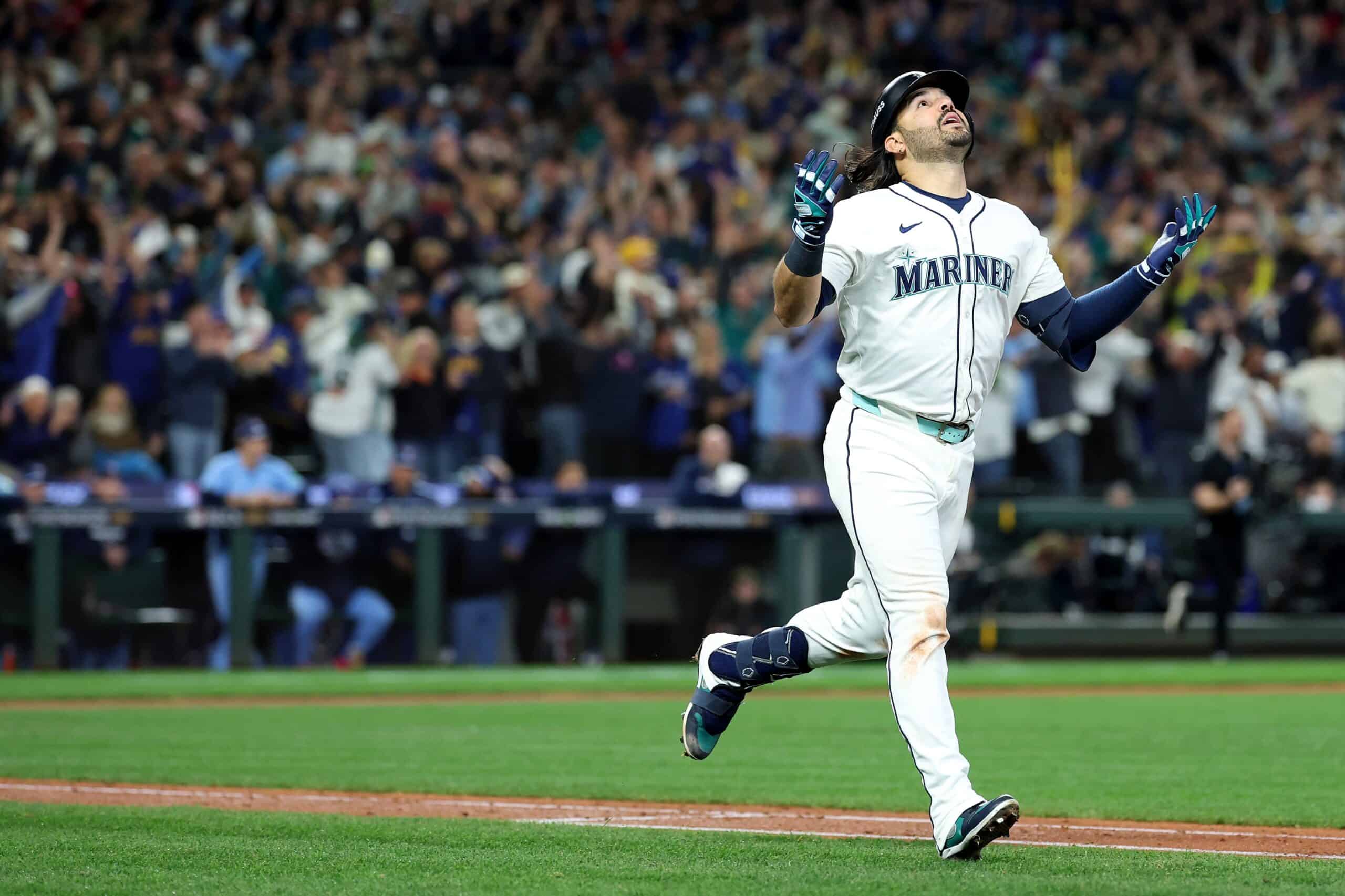
There’s no other sport where players grind for 162 games only to see it all come down to a few pitches in October. That’s what makes baseball so cruel. And so beautiful. The entire marathon of a season can end on one pitch.
And that’s exactly what happened in Game 7 of the 2025 American League Championship Series. Seattle Mariners manager Dan Wilson pulled the hook on his All-Star pitcher, Bryan Woo. He brought in Eduard Bazardo, a journeyman reliever who had succeeded in high leverage situations down the stretch, but had been streaky all season. He was to face George Springer, the Toronto Blue Jays slugger and Mariners killer who is tied for third all time on the Major League Baseball postseason home run list.
Wilson will have to answer for that decision for the rest of his life. Especially with Andres Munoz, the Mariners All-Star closer, available in the bullpen.
On Bazardo’s second pitch, Springer blasted a home run to give the Blue Jays the lead and ultimately, the win. In a matter of seconds, the Mariners’ hopes of ending their postseason curse as the only team not to reach the World Series came to an abrupt end.
As I described in a separate piece, it’s like going to your favorite restaurant with your loved ones, only to be told at the door, “Please come back next year.” Meanwhile, you can see everyone celebrating inside the opulent dining room.
The only difference in baseball is the 162 games required to get to that point. Teams must climb a mountain all year, with all but one falling off before they reach the top. And when you get so close to the peak that you can see it, that fall is particularly gruesome.
As someone whose team – the Seattle Mariners – had failed to reach the American League Championship Series for 24 years prior to 2025, it’s almost easier on the heart when the playoff run doesn’t even happen. It’s easier to rationalize another losing season than one that carried so much hope, promise, and excitement, but ultimately ended in failure.
And when your team has slogged through 162 games, not counting spring training or intensive playoff series, it’s demoralizing. Like a sucker punch you didn’t see coming after enduring 12 rounds.
But there’s another reason why baseball is so unique. The grind of the regular season and playoffs hardens players, teams, and fans. The emotional roller coaster rides and redemption storylines inspire us to get back up and keep trying.
It’s why baseball is the ultimate sport to teach us how to begin again.
A story of Red Sox redemption
No team and fanbase embodied redemption better than the 2003 and 2004 Boston Red Sox. Their story mirrors what the Mariners just went through. But arguably darker and more painful.
The Red Sox reached Game 7 of the American League Championship Series in 2003. They also had a beloved manager make a fateful decision that would define him forever (and get him fired after that season). And they, too, saw their season end on one devastating swing.
When Aaron Boone launched an extra-inning home run into that Bronx night, it didn’t just eliminate the Red Sox. It reopened deep generational wounds. The “Curse of the Bambino” was real, and Boston fans knew the feeling that us Seattle fans can empathize with – some teams may just be destined to fall short.
But thankfully in baseball – which isn’t always true in life – there’s always next season. The heartbreak can heal from the first cracks of the bats in spring. And in 2004, the Red Sox didn’t just redeem themselves. They broke the curse.
The Red Sox found themselves facing the Yankees in the same spot once again. But this time it was arguably worse. They had fallen behind three games to none in the American League Championship Series (best out of 7). No team in MLB history had ever come back from a 0-3 deficit. It looked like the curse would continue.
I still remember watching Game 4 of that series from the hospital waiting room. My maternal grandfather passed away around the same time Dave Roberts stole second base, helping change Red Sox fortunes forever. David Ortiz would go on to hit one walk-off home run after the next. Curt Schilling pitched with a bloody sock. Then the Red Sox completed not only the greatest comeback in baseball history, but they would also go on to sweep the St. Louis Cardinals to win their first World Series since 1918.
They never quit. When they looked broken in 2003, they picked up the pieces and showed up again the next year. Stronger. Hungrier. Energized.
Their perseverance through 2003 and the rollercoaster of 2004 proved something deeper. That persistence can rewrite a “cursed” destiny. That the same game that breaks your heart can also fill it with passion, joy, and love for eternity.
Baseball teaches this more than any other sport. There’s always another pitch, another inning, another season. Failure isn’t final. It’s just part of the story.
Baseball provides a window to redemption in life
For me, this is the real magic of baseball. The story of human endurance beneath all the fancy sabermetric stats and strategy (don’t talk to me about defensive shifts). It’s about picking yourself up and showing up for another day. Even when the season feels endless. Even when it seems like there’s no hope on the surface.
Unlike sports like football and basketball, baseball isn’t often decided by who’s bigger, faster, or stronger. It’s a test of character and endurance. How do you respond to failure? How do you handle yourself through its natural pauses between pitches? Does the pressure get to you?
It’s one of the few sports where failure is the norm, not the exception. Where the elite hitters fail seven out of ten times. Where the best teams lose 60 or 70 games in a season.
Redemption is a necessary condition of the game. Every pitch, every inning, and every season ends in failure for most players and teams.
So when I sat there watching the Red Sox claw back against the Yankees in that hospital waiting room, it felt like more than a sports story. It was almost like a parable. And a reminder that nothing – not even generations of misery – is permanent. This is true for the Red Sox, the Mariners, and for all of us in life.
Some seasons of life are darker than others. Some seasons end too soon. There are many moments where we fall short. Or where it feels like heartbreak has come to define us.
But like baseball players getting back on the field, we learn to keep showing up. Grab the rosin bag and throw another pitch. Take another swing. With the hope that one day, maybe next year for my Mariners, the story will end differently. As it did for the 2004 Red Sox.
The beauty there isn’t just in the winning. But in the willingness that baseball imposes to keep playing.


0 Comments