Why Japan’s 7-Eleven Will Never Work in America
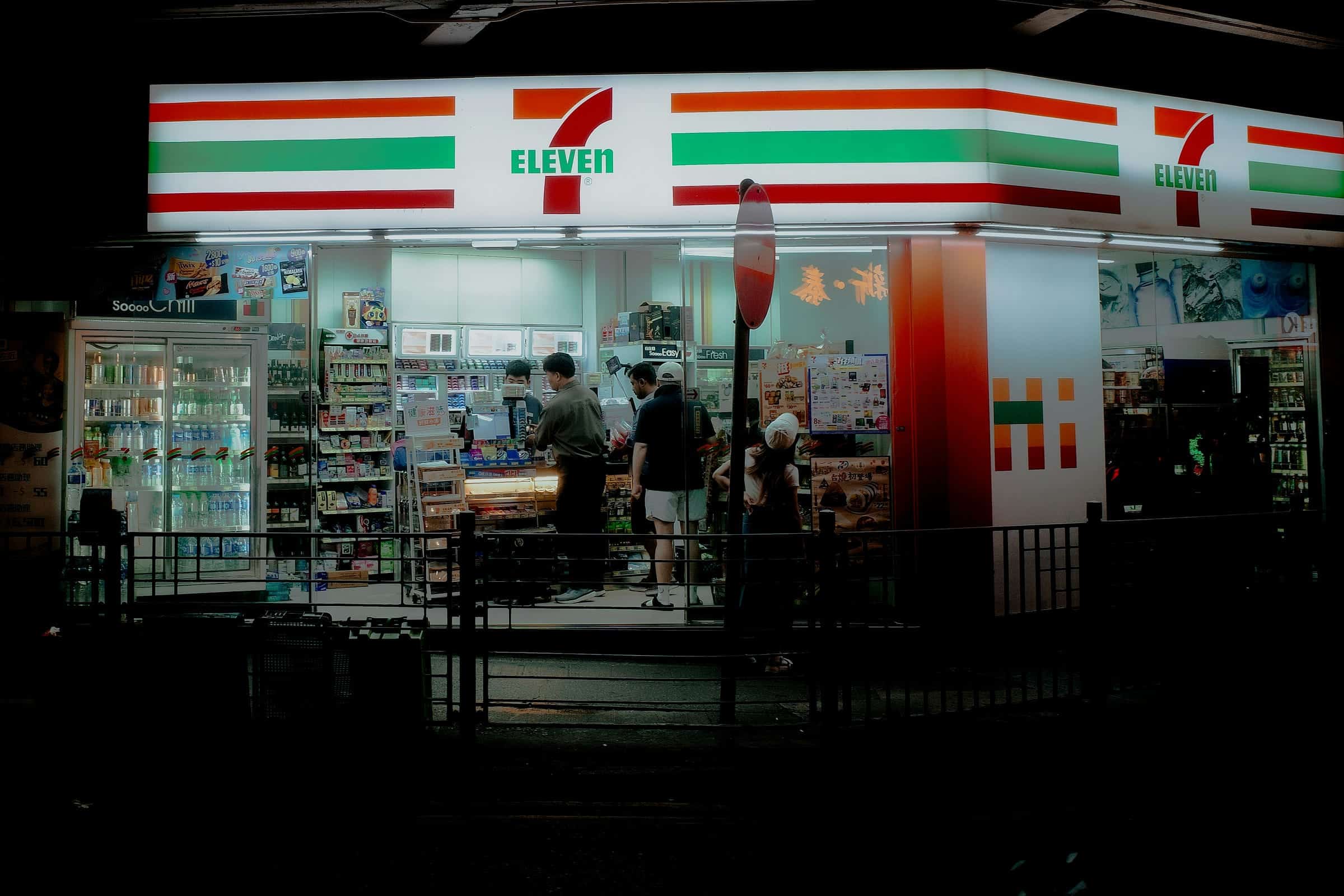
Boxes everywhere. That was my first impression stepping into a Midtown Manhattan 7-Eleven, which was tucked under scaffolding with a man sleeping outside the entrance. Many of the shelves were empty. Smells of grease wafted in my direction from the hot food station.
Pizza slices, hot dogs, and a mysterious delicacy named “Bun on the Run” were offered hot and ready. Next I passed an out-of-order Slurpee machine that was blocked by even more boxes.
The whole experience inspired me to find some fresh food elsewhere. Was this really what 7-Eleven had become in America?
About a month later, I stepped into a Tokyo 7-Eleven in Ginza. Same chain, different universe. The floors gleamed. Not a single gap or misplaced item could be found along numerous rows of shelves.
The pastry section, for example, was like a miniature bakery filled with all sorts of Western, Japanese, and fusion delights like red bean donuts. There were too many milk tea and iced coffee varieties to count. And of course, they had the world-famous egg sandwich, which Anthony Bourdain described as “pillows of love.”
The Tokyo 7-Eleven even had ample seating. Nobody was camping at the tables or at the entrance outside. It felt like a café masquerading as a convenience store.
It got me thinking — why not bring the pristine and orderly Japanese 7-Elevens to America? Could their rumored arrival actually work in the U.S.?
As much as I would love to say, “Yes!”, I’m not confident it’s a sustainable business model in America. The gap between even Tokyo and Manhattan isn’t just about management, branding, or food inventory. It reflects deeper cultural, social, economic, and even geographical differences that make it hard to imagine the Japanese 7-Eleven model thriving in America.
American convenience vs. Japanese quality
In America, we’re almost always happy to compromise quality for convenience. The story of American bread is the perfect example. Many Americans prefer shelf-stable, cheap, and reliable. Even if the bread is made with ingredients like potassium bromide that are illegal almost everywhere else.
It’s why I started making my own sourdough. It’s also why I don’t patronize American 7-Elevens. Not because I think I’m above them, but because I prefer cleaner spaces and whole foods. And if I am going to indulge, I’m not getting the pizza or hot dog from 7-Eleven, I’m going to one of New York City’s great pizzerias, or I’m helping the local cart guy on the sidewalk.
I was, however, happy to try the 7-Elevens in Tokyo because of their reputation for flipping this American assumption on its head — that we must sacrifice quality for convenience. At a Japanese 7-Eleven, you can grab a fresh sandwich, rice ball (onigiri), or any number of bagged snacks that won’t spike your insulin levels through the roof.
I never questioned whether the bread in their pastries was engineered in a lab three weeks ago, or whether it had been frozen for months. In Tokyo, convenience doesn’t equate to less quality; it means delivering simple food quickly and reliably.
This distinction is culturally important. In America, we’re trained to lower our expectations for any food in packaging or wrappers. We expect cheap fuel, not something memorable. But in Japan, people expect quality even from a convenience store shelf. So the system delivers it.
Japan’s density makes convenient quality possible
A 7-Eleven in Tokyo can restock multiple times per day, guaranteeing quality for its fresh food offerings. They can cycle inventory because there’s enough foot traffic to keep shelves turning over. And it’s common for the Japanese to stop at convenience stores for breakfast, lunch, or even dinner because they know the food will be fresh.
When you go into America, by contrast, you go into the great wide open, as Tom Petty would say. While a Manhattan 7-Eleven may be able to turn inventory like those in Tokyo, a 7-Eleven in eastern Washington state where I went to college, would be lucky to get fresh inventory every few days.
Many people don’t realize how spread out America is until they try to drive across her many geographies. Stores serve fewer people who spread over more distance, so turnover is naturally slower. This promotes a culture of shelf-stable goods that can sit for days — or even weeks — without spoiling.
Logistics have helped shape the American diet.
In Tokyo, 7-Elevens are quick-stop cafés. In America, they’re more like stand-in social infrastructure. With so few public restrooms in American cities, convenience stores become default pit stops — places people linger not as customers, but as citizens with unmet needs.
And unlike Tokyo, American 7-Elevens are almost never treated like a café. I’ve never seen seating inside one like what I saw in Ginza. In America, they’re less café and more social safety nets we neglected to build.
Even if America solved logistics, we would have palate problems
Let’s assume America solves the complex logistics and supply chains that make Japanese 7-Elevens possible. Now comes the question of taste.
Our American palates have been trained to equate “value” with hot, fried, and supersized. I’m talking jumbo pizza slices under heat lamps, fried chicken dripping in oil, and corn dogs sweating from the fryer. This is what many Americans expect when ducking inside a convenience store.
It’s not just about filling up. It’s about getting the most bang (or heartburn) for the least money.
The Japanese convenience store model is completely different. It means lighter, fresher, and often cold food — onigiri, delicate and crustless sandwiches, red bean pastries (try the donuts!), and bottles of milk tea. None of this will make you feel like a weighed down greaseball. And they’re not the “low status” foods they are in America, but everyday staples designed to eat quickly and most importantly, to satisfy.
This cultural divide may be the hardest to bridge. Would Americans actually buy chilled rice balls filled with mysterious wonders or neatly wrapped sandwiches as soft as pillows? Or more likely, would Americans leave these shelves full and opt for microwaved pizza?
Our palates are not accidents. They’ve been shaped by decades of marketing, socioeconomic factors, and habit. Change is glacial. And until that change comes, what works in Tokyo probably won’t translate to Times Square or Tulsa, Oklahoma.
The people make 7-Eleven possible in Japan
Beyond logistics and palate, what really makes the 7-Elevens so pristine in Japan is the people. The stores do not magically become spotless and orderly. The staff take their jobs seriously.
There’s a cultural expectation in Japan that service — no matter the job — should be carried out with pride and precision. A convenience store clerk generally upholds the same standard of cleanliness and order as someone running a high-end boutique.
In America, this expectation doesn’t exist. Convenience store jobs are usually minimum wage with high turnover. They can be unsafe and the team is often understaffed and treated like the disposable coffee cups they offer. That environment is hardly an incentive to clean messy aisles, unpack boxes quickly, and maintain food quality and freshness.
This is true beyond 7-Elevens. It goes for all American convenience stores. People go out of convenience because they’re grabbing gas or need something specific like bottled water. They don’t usually go for fun. Nobody really wants to be there, including the people behind the counter.
This difference in labor standards and pride of service is invisible until you experience it firsthand. As someone who worked service jobs at a deli and in retail, I can tell you how thankless they can be in America. And then you’re reminded of it on the commute home as the smells stick to your clothes.
In Japan, the pride of the worker translates directly into the customer’s trust in the food. It’s a big reason why one company — 7-Eleven — can feel like two entirely different businesses depending on which side of the Pacific you’re on.
7-Eleven may be a cultural divide too large to bridge
The differences between Japanese and American convenience stores are more than about offering onigiri instead of pizza. They are cultural, socioeconomic, and geographic. From sprawling country and vast urban landscapes that complicate supply chains, to the American preference for hot, greasy foods, the U.S. market presents challenges that Japanese models may struggle to overcome.
It’s not like Japanese-style convenience stores haven’t been attempted in America. Famima!!, the second largest Japanese convenience store chain behind 7-Eleven, tried to establish itself in Los Angeles in the mid-2000s, but ultimately failed by 2015. The initial excitement and media attention was gone within a decade.
This example fuels my existing skepticism that 7-Eleven can transplant its Japanese convenience store culture to America, as they are reportedly attempting to do. The disparities in consumer behavior, urban infrastructure, and labor standards will likely cause America to reject the transplant, like the body rejecting a donor organ.
Which is sad for me because the Japanese 7-Elevens were like a dream. But perhaps America doesn’t need the Japanese 7-Elevens. Maybe we need to rethink why we’ve accepted such low standards in the first place.
For more great food and culture content, see here – and be sure to subscribe to our newsletter below!


0 Comments