What Will Determine Escalation in Iran
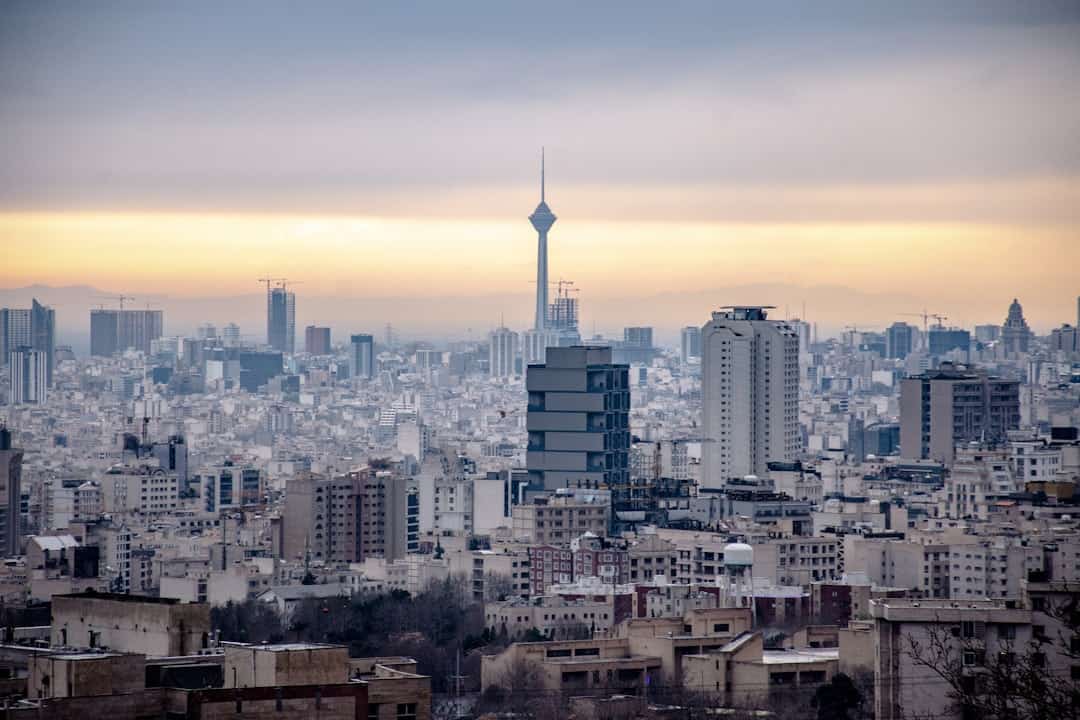
We need to be honest about something with the war in Iran. An aerial campaign is unlikely to change much. It has all the makings of the post-9/11 interventions we Americans spent two decades (most of my life) trying to exit.
But what has really changed inside Iran? The Ayatollah may be gone, but his son is taking his place. And he appears to be even more of a hardliner than his dad.
The Revolutionary Guard, the clerics, and the theocratic government are all still in place. There’s little evidence they’re going anywhere, despite killing thousands of their own citizens.
Which is why when we’re asking — what will determine escalation in Iran? — it’s less about military outcomes, unless something drastic changes, and more about the following five macroeconomic and geopolitical factors.
These factors will likely determine whether markets make the U.S. back off, whether Iran offers a negotiated off-ramp, how China could get more involved, what could make the U.S. and Israeli interests diverge, and what will influence the overall American posture.
Most media coverage is not tracking these five pressure points. Which one moves first will likely indicate the direction this war will turn.
The bond market may be the greatest check on President Trump
I’ve been saying it since Liberation Day — the bond market is the greatest check on Trump. If the 30-year U.S. Treasury marches towards 5% like it did last year, we may find ourselves in TACO territory. Where “Trump Always Chickens Out” (30-year Treasury yields are around 4.75% as of this writing).
The U.S. economy recently posted terrible job numbers, a rising unemployment rate, and persistent inflation near 3%. A sell-off of long-dated Treasuries would put pressure on an already sputtering domestic economy. The warning light signals that stagflation could be ahead if this trend continues.
And that’s a central bank’s worst nightmare. New Fed Chair Kevin Warsh (assuming he’s confirmed) could find himself in an impossible situation — trying to revive a slowing economy while prices rise. We found ourselves in this situation in the 1970s and it was terrible. The Fed had to hike interest rates well over 10%, basically causing a self-enforced recession that took America over a decade to recover from.
If Liberation Day was any indication, Trump is price sensitive at a certain point (which I would mark at 5% yields). Rising yields means higher mortgage rates, credit card rates, personal loan rates, and higher prices throughout the U.S. economy. That would be political suicide, especially in a midterm election year.
So I would expect Trump to pull back significantly on any further aggressions and incursions into Iran if long-dated yields kiss 5%.
Which faction will emerge in Iran?
We already know the regime isn’t going anywhere. For now. Mojtaba Khamenei, a son of the recently killed Supreme Leader, is set to become the next Ayatollah. He has close ties to the Revolutionary Guard, and has played key roles in coordinating military and intelligence operations.
With that said, his politics are largely mysterious and unknown. He has rarely appeared in public. So whether he will double-down amidst U.S. and Israeli force or seek a more diplomatic off-ramp is going to be key.
His father had offered few concessions in nuclear negotiations with the U.S. He had ordered lethal crackdowns on his own people, reportedly killing some 7,000 protestors in recent months.
If the son acts in a similar way, this conflict could easily run indefinitely like the post 9/11 forever wars. Iran may retrench and absorb the strikes while digging in further.
I’m not confident that the Ayatollah’s son who was so deeply part of his father’s administration will lead to different outcomes. I expect few concessions and off-ramps for peace, but any signal otherwise could indicate a new direction or the new regime buckling under pressure.
How China responds will be key
This is the ultimate wild card. Will China provide an economic lifeline to Iran given their economies are so connected via oil? Will they offer weapons or even get involved directly?
China has a wide range of options from deescalation to various escalation scenarios that involve economic and/or military aid. It’s not in their interests for a defanged Iran, but they also can’t afford a prolonged conflict with spiking energy costs.
As I wrote previously, China is the world’s biggest oil importer, so energy market volatility is painful for a domestic Chinese economy that’s already experiencing slower growth with its property market under stress.
It’s in China’s best interests to calm oil markets, while supporting the Iranian regime. How they choose to strike this balance will be key for whether escalation continues or not.
Will U.S. and Israeli interests diverge?
Both countries have very different threat profiles. Israel views Iran as an existential threat that wants to wipe them off the map. The U.S. views Iran more as a nuisance and potentially as the means to enforcing a Beijing Blockade (hurting China by denying her cheap Iranian oil).
Those are very different motivations and incentives.
Israel is within range of many types of Iranian missiles and drones, whereas the U.S. is not.
Israel wants Iran permanently defeated. They’ve already threatened to take out the next Ayatollah. Trump, on the other hand, campaigned on “no more forever wars.” He wants to flex his military muscles, sign a deal, and smile for a photo op (like Bush’s notorious “Mission Accomplished”).

The domestic political situation in each country reflects these diverging interests. The key will be whether Israel can convince the U.S. to keep fighting even when “success” is not fully defined for America.
And if the U.S. picks an off-ramp for negotiated peace, how will the Israelis respond?
Israel arguably needs America as their Middle East protector more than America needs Israel. But this reality may be superseded by a once-in-a-generation chance to topple the Islamic Republic in Iran.
American posture will change rapidly
All of the factors noted above will force America’s posture towards this war to change rapidly. Just before the market close on March 9th, Trump indicated that the “the war is very complete.” Then just this morning Pete Hegseth said that “we will not relent” until Iran is defeated.
This yo-yoing strategy will continue until it can’t. If more American servicemen die or the air campaign yields poor to no results — or any of the factors above compel America to stand down — Trump will look for the exits.
European and Gulf allies should be offering diplomatic cover for an off-ramp option. They may not have significant leverage over America, but they can play to Trump’s ego and congratulate him for taking out the Ayatollah. They can make it appear that this operation has already been a success.
Actions speak far louder than words here. Numbers of munitions, deaths, and potential ground troop movements are all important indicators for which path America will take.
So for now, watch the bond markets just as much as you watch America’s posture. Keep an eye on the Iranian military response to aggression, don’t lose sight of China, and be aware of cracks in the U.S. and Israeli alliance.
Whichever factor moves first will tell us everything.


0 Comments