Private Credit Cockroaches?
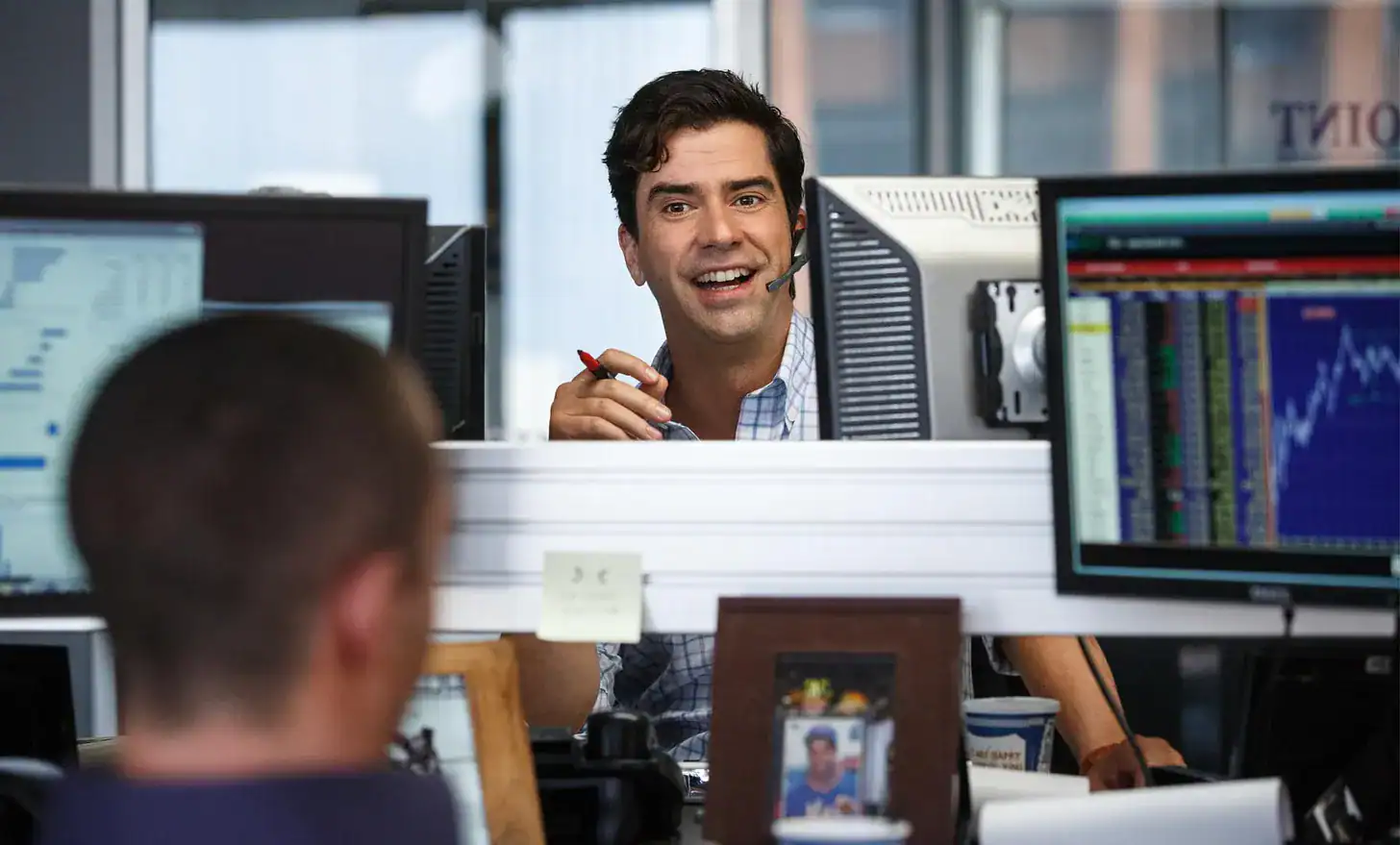
I was reading this FT story the other day about the ABS East conference in Miami and couldn’t help thinking about 2008. ABS stands for asset-backed securities, and it’s one of the main areas of private credit, a $1.7 trillion U.S. market that has boomed since the financial crisis as the regulatory focus zoomed in on big banks.
I wasn’t at the ABS East conference this year, but it apparently drew a record 7,200 people, which is a lot of ballrooms and cabanas filled with Patagonia-clad finance bros telling each other about their latest strategy to layer borrowing through loans and securitized debt.
“It’s practically risk free!”
The current structures in private credit — and the descriptions of this Miami conference — reminded me of 2006 and 2007. When mortgage-backed securities conferences, as depicted in films like The Big Short, were attracting hordes of newcomers. When many of the bros at the time couldn’t wait to tell you about their latest product, collateralized debt obligations (CDOs), which as you may recall, also layered borrowing and risk in tranches of mortgages.
Until we realized a year or two later that this complex layering didn’t really matter. The bad mortgages that made up those CDOs were just that — bad. All of the fancy tranches and complicated descriptions were simply waxy veneers disguising reality’s ticking time bomb.

Now look, I still love the finance bros and my Barbour vests still hang in the closet. I don’t blame the player here, I blame the game. Folks are just acting on incentives.
With private credit today, why would anyone seek lending from a heavily-regulated and slow-moving bank when you can get basically unregulated (and unlimited) private capital? Especially when you can then leverage that capital to make additional loans and buy securitized debt.
But now that private credit has been such a money-making bonanza and major risk to banking market share, the banks have also gotten in on it. They now regularly lend to private capital, who then makes loans and buys securitized debt.
Private credit’s defenders argue that investors absorb the first losses, not bank depositors. And that should work in theory, but it sounds awfully similar to the same arguments once made about CDO tranches.
“It doesn’t matter if the first few subprime tranches fail. We have good mortgages in the other tranches!”
The layers of borrowing in private credit now make it difficult to determine who’s on the hook. So when a car-parts manufacturer like First Brands finds themselves in a web of complex borrowing, it naturally creates complacency. It can make them ask, “Who do I really owe anything to?”
When banks lend directly, they do more due diligence and they’re incentivized to pick borrowers carefully. Reduce anyone’s skin in the game and risk concerns evaporate. It leaves creditors pointing at each other for who should absorb losses once companies like First Brands and subprime auto lender Tricolor collapse.
Nobody wants to be left holding a bag of “cockroaches”, as Jamie Dimon called the recent failures in the credit market. Yet everyone is competing to loosen lending standards just enough to gain a competitive edge in an increasingly tight market.
Cockroaches be damned.
Which is why First Brands’ lenders may have missed its double-pledging of invoices and inventories (where First Brands borrowed multiple times against the same invoices). Federal prosecutors literally used the word “Ponzi” in the their First Brands indictment, alleging that new loan proceeds were used to pay back old lenders.
Does this not remind you of those synthetic CDOs that proliferated in the financial crisis era? Where CDOs were created on top of one or more additional CDOs. Where new CDOs were used to pay off old defaults. Where $50 million in mortgage-backed securities were frequently levered some 20x to create $1 billion in exposure.
Here is what the First Brands’ indictment alleges:
“First Brands employees routinely submitted fake invoices, fraudulently inflated invoices, and double-pledged invoices for the purpose of selling and pledging them to factoring counterparties,” and “the defendants defrauded First Brands’ senior lenders by concealing the nature and scale of the off-balance-sheet financing.”
First Brands collapsed with over $9 billion in liabilities but only $12 million in cash. I’m not kidding or being hyperbolic about the CDO comparison.
All of that financing has led the IMF to warn U.S. and European banks this month that their $4.5 trillion of exposure to “non-bank financial groups” (mostly private credit) could be destabilizing. And worse, some of those banks hold exposure to private credit that exceeds 5x their Tier-1 capital. Talk about a smoking private credit gun.
So understandably, the IMF called for heightened regulation of private credit, private equity, and hedge funds that consume this lending.
But what are we doing here in America?
The exact opposite!
Surprise! Or not so surprising?
The Federal Reserve is making annual banking stress tests less burdensome. It’s likely that other watchdogs and regulators like the OCC will follow suit with changes to capital and leverage rules, allowing banks to unleash trillions in additional lending.
So instead of adding more risk, capital, and supervisory requirements around private credit, we’re sending the industry to a money bath. We don’t seem to care about the likely cockroach infestation of the bathroom.
And we’re not done there!
Every average Joe is invited to this house. A Trump administration initiative allows ordinary investors to put their money in “alternative assets”, which have long been restricted to institutions and accredited investors (rich people). This will open the doors to a stream of retail and retirement money for private credit to use.
The initiative is called: “Executive Order on Democratizing Access to Alternative Assets” (signed in August 2025).
That means bigger money baths to make bigger loans and bigger purchases of asset-backed securities.
Let the cockroaches play.
So not only are we regulating this area less and less, but we’re inviting more people to the house party.
For one of my favorite attempts to “democratize” finance for ordinary people, read John Raskob’s “Everybody Ought to Be Rich.”
This spectacularly ill-timed essay was published in August 1929, months before the stock market crash that triggered the Great Depression. And just months prior in that essay, Raskob had encouraged ordinary investors to put their life savings in overpriced leveraged closed-end funds. Everybody ought to be rich, right?
You know how that ended.
It’s a tale as old as time — there’s always someone looking to sell overpriced assets to suckers. Now we seem to be codifying this into 2026 laws, with no memory or willful blindness of history.
And we haven’t even addressed the giant elephant (or cockroach?) in the room — AI-related private credit. It is projected to soar in 2026:

As the FT noted:
“By 2030, half of the 10 largest borrowers in the US investment-grade corporate bond market will be so-called hyperscalers — companies such as Alphabet, Amazon, Meta, Microsoft and Oracle that are building colossal data centres.”
I’m not worried about Alphabet, Amazon, or other hyperscalers going bankrupt, but I am concerned with the ecosystem financing them. Like the synthetic CDOs of the 2000s, there’s leverage on top of leverage.
These hyperscalers have largely shifted from cash-funded to debt-funded models. It’s no longer “free” money, but leveraged bets on ROI that might take years to materialize (if it ever does).
And in the private credit world, valuation games can be played when dealing with illiquid assets that have little oversight. Who’s stopping a private credit shop from marking something as “fair value”, despite the challenges of valuing that credit in the first place?
There are liquidity mismatches too. Investors increasingly want redemptions, as they did this past year, pulling some $7 trillion from Wall Street’s biggest funds. Yet many of the loans are much longer-dated than one year.
There is no stress testing in this area, so we don’t know what would happen in a recession if defaults spike and more cockroaches appear. And now we’ll apparently have less stress testing on the banks who increasingly lend to private credit.
What makes it most risky is the contagion effect. The same firms are doing not only private credit, but private equity and real estate. More banks are getting involved. Which makes the systemic risk similar to the 2000s flavor of mortgage originators, those securitizing and selling derivatives on those mortgages, and the insurance companies underwriting it all.
But “this time is different”, right?
Famous last words.
As someone who worked on Wall Street trading floors for years, it’s a phrase I often heard. I learned that the term “riskless asset” should often be inverted to the “riskiest assets.”
I’m not here to rain on the ABS East conference parade. Private credit markets create a lot of quality innovation and business. They fill the gap created by banks that had to retreat after 2008.
But we need to be realistic about the risks, especially those that could pose more systemic problems, while being mindful of our long history of crashes, recessions, and depressions of the past.
Instead of regulating burgeoning new areas like private credit in a proactive way, we often choose to bail out industries reactively.
But if you see a cockroach in your apartment, do you just get rid of it and ignore it? Or do you call the exterminator to see if others might be lurking in the walls and pipes?
Do you check your 401(k) or pension to see what, if any, exposure you have to those “alternative assets”?
I know what I would do, but if history serves as any indicator, legislators and regulators won’t address the issue until it’s too late.
Private credit insiders insist that its “locked up” capital makes bank runs impossible. But as we learned with the First Brands and Tricolor cockroaches, you don’t need a run on the bank to break the system.
You just need the collateral to be a fiction.


0 Comments