Why Even Have the 25th Amendment If It’s Never Used?
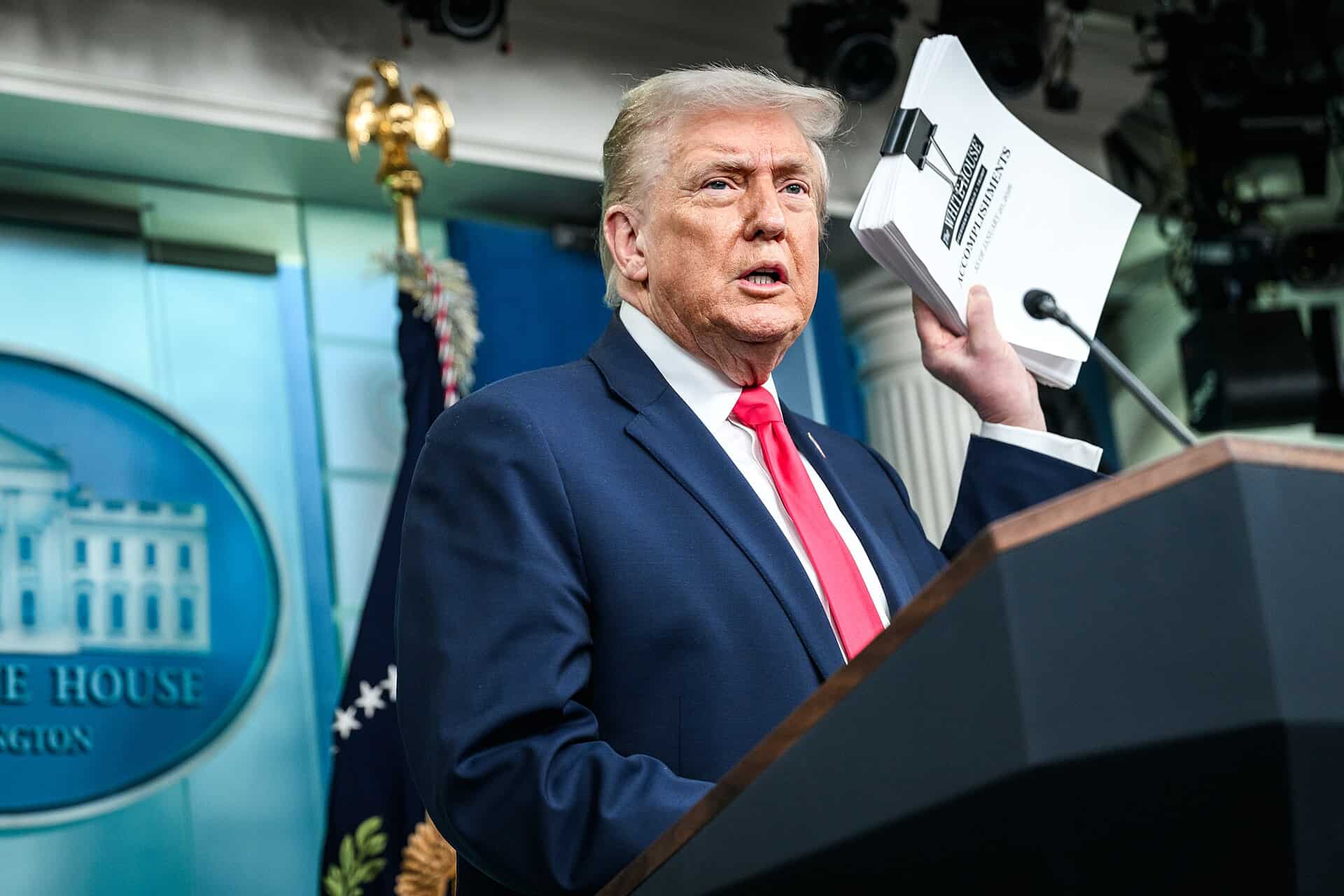
For some people, the letter Donald Trump sent the Prime Minister of Norway was the final straw. There have been other straws like the call with Zelensky in 2019, the storming of the U.S. Capitol on January 6th, and the latest threats to invade Greenland. But for some reason, that letter to Norway bothered people in a 25th Amendment type of way.
Probably because it revealed Trump’s state of mind. How upset he was not to win a Nobel Peace Prize; a prize that the recipient of the letter, the Prime Minister of Norway, had no power to give him. How he connected this perceived injustice to his current mental state:
“I no longer feel an obligation to think purely of Peace, although it will always be predominant, but can now think about what is good and proper for the United States of America.”
How he further connected this perceived injustice to his desire to have “Complete and Total Control of Greenland.” The capitalization in that quote was his own.
Read the entire letter.
To be fair, he backed off on those threats at Davos, stating he would not use force to take Greenland. There was pressure on him from the stock and particularly the bond market (as I described in this video).
Regardless, the series of incidents led some to question Trump’s fitness. His competency.
In these moments, some called for invoking the 25th Amendment. But what exactly does that mean? And what does it look like, practically speaking?
The primary catalyst for the 25th Amendment was the JFK assassination
The 25th Amendment was ratified on February 10, 1967. Prior to this time, the U.S. Constitution was silent on how to handle an incapacitated President.
We already had the “Tyler Precedent”, established by John Tyler in 1841. At that time, President William Henry Harrison became the first President to die in office (only 31 days into his term). This created one of our first “constitutional crises” and revealed a major legal black hole in the Constitution.
Here’s the relevant part of Article II that’s terribly vague:
“In Case of the Removal of the President from Office, or of his Death, Resignation, or Inability to discharge the Powers and Duties of the said Office, the Same shall devolve on the Vice President…”
Did “the Same” refer to the “Office” of the President or simply the “Powers and Duties” (meaning the Vice President stays VP, but performs the work)?
This is when then Vice President John Tyler made some power moves.
He rushed to Washington, D.C. to swear in as President. He refused to be called “Acting” President, and apparently even returned mail that addressed him as such. He clashed with Harrison’s cabinet who attempted to decide all major policies by majority vote until they were overruled by Tyler and threatened with mass firings.
Congress eventually recognized Tyler as President. But it was the first instance that highlighted the constitutional question. And after Tyler, the “Tyler Precedent” was followed seven more times before it was formally written into the Constitution through the 25th Amendment:
- Fillmore (after Taylor)
- Johnson (after Lincoln)
- Arthur (after Garfield)
- Roosevelt (after McKinley)
- Coolidge (after Harding)
- Truman (after FDR)
- Johnson (after JFK)
You can now find the “Tyler Precedent” in Section 1 of the 25th Amendment:
“In case of the removal of the President from office or of his death or resignation, the Vice President shall become President.”
Death, of course, is not the only way a President can become incapacitated though. We’ve had other scares in America — even before the JFK assassination — that highlighted other issues beyond the “Tyler Precedent.”
Woodrow Wilson had a stroke in 1919. He was incapacitated for the remainder of his term and his wife and doctor effectively managed the presidency in secret.
Dwight D. Eisenhower had a heart attack and stroke during his presidency, which led to an informal agreement between him and his VP, Richard Nixon, about how to handle a power transfer.
But the final straw that led to the 25th Amendment was the assassination of John F. Kennedy. He was alive but incapacitated for a period of time, leading people to question who was in charge. There’s a famous photo of Kennedy’s Vice President Lyndon B. Johnson eventually taking the oath of office aboard Air Force One.

Following the tragic assassination of JFK, the main purpose of the 25th Amendment was to ensure the continuity of government.
The text and intent behind the 25th amendment
The amendment itself is divided into four sections (or “what-if” scenarios):
- VP becomes President — this is the “Tyler Precedent” I mentioned above.
- Filling VP vacancies — designed to prevent long periods without a VP.
- Voluntary transfer of power — intended for planned medical procedures or temporary illness of the President.
- Involuntary transfer of power — the “fail safe” for a President who’s unable or unwilling to admit their own inability.
For the purposes of this piece, let’s focus on Section 4, the involuntary transfer of power. You can read the full text of that section here.
Remember when this was written. During the nuclear age. We had just had the Cuban Missile Crisis and the Cold War with the Soviet Union made clear — the U.S. could not afford even a few hours of a leadership vacuum.
The authors of this amendment deliberately chose not to define “inability.” They feared falling down a medical rabbit hole. They also didn’t want to miss any unforeseen circumstances.
What if the President was kidnapped or captured (see Nicholas Maduro across the river from me in Brooklyn)?
The drafters did make clear, however, that “inability” was not the same as unpopularity. It was about the “capacity” to perform the job of President. Not the quality of that performance.
This is where it starts to get controversial and debatable. Mainly because we literally have NO precedent. All other sections of the 25th Amendment have been used, but this Section 4 has never been attempted or formally interpreted by the Supreme Court.
There are two groups who can remove an “involuntary” President with an “inability” to perform the job. The first is the President’s cabinet. This has the most political legitimacy given they are the President’s closest advisors. It also defends against a “coup” by the Vice President (the VP cannot act alone).
The second body — or the “fail safe” — is “such other body as Congress may by law provide.” This was intended as a backup should the President’s cabinet be figuratively captured by the President out of loyalty. And there’s precedent here given how people close to Woodrow Wilson protected him. And to a lesser degree, it’s debatable that people close to Joe Biden protected him too much as well.
Congress has never attempted to create this “other body” so we don’t really know what it could look like. But if I were to take a stab at it, I think Congress would create a commission filled with medical experts, constitutional scholars, and maybe even former Presidents (including those of the President’s party, ideally) to replace the Cabinet’s role if they have become a loyalty barrier.
Assuming all of that happens, now comes the highest bar: the 2/3 majority vote. This is harder to use than impeachment.
Impeachment requires a simple majority in the House and 2/3 in the Senate. The 25th Amendment requires 2/3 majority of BOTH houses.
The framers of this section were concerned that a strong and popular Vice President could “steal” the presidency. So the process is heavily tilted in favor of the sitting President. Therefore, even if a small minority of Congress supports the President, they keep power.
A somewhat amusing legal nuance of Section 4 is that the Vice President never actually becomes “The President.” They only get to be “Acting President.” So the disabled President (with whatever “inability” they were found to have) technically keeps the title of “President” and even remains in the White House. The catch is they lose all legal authority until they are declared fit again or their term ends.
Let’s play out how this might happen. And the odds of it happening.
Section 4 of the 25th Amendment, Donald Trump, and financial market implications
For Section 4 to even begin, Vice President JD Vance and a majority of the Cabinet (so 8 out of the 15 department heads) would have to sign a letter declaring President Donald Trump “unable to discharge the powers and duties of his office.”
The Vice President must lead the charge here, so Vance would be taking a massive political risk. And if his attempt failed, he would be remaining in office with a President who would now view him as a usurper, destroying any future political dreams and influence, and probably finding himself behind bars at some point given how aggressively Trump prosecutes political enemies.
All of that is obviously highly unlikely to happen.
The more likely — but still highly improbable way — would be if Congress created a commission like the one frequently introduced by Representative Jamie Raskin. This would include medical experts and retired elder statesmen (probably George W. Bush, Newt Gingrich, and other Republicans of the past).
If that commission determined the President is unable to serve, they would sign the letter to Congress, bypassing the Cabinet.
But the VP hurdle remains. Even if Congress created that commission today, and even if the commission concluded that President Trump had an “inability” to serve, the Vice President is still the gatekeeper.
“Whenever the Vice President and a majority of… such other body…”
The Vice President must agree and sign the commission’s document.
Regardless, the odds of the current Congress creating this commission are effectively zero given the Republican control of both houses. Even if the Democrats retake the House and Senate in the midterms, the enforcement of Section 4 is still unlikely given the high supermajority and VP hurdles.
The reality is that Section 4 of the 25th Amendment is like a constitutional dead letter; a provision that could probably be used in a catastrophe (like a stroke or kidnapping) but probably never under more political circumstances.
And this is before even considering other implications like how financial markets would likely react to even an attempt to remove a sitting President under Section 4. I often talk about bond markets being one of the greatest checks on executive power, and it would be here as well. Financial markets generally loathe uncertainty and few things are more uncertain than a transfer of power.
Just consider how the S&P 500 declined by roughly 23% from the Watergate break-in to Nixon’s resignation (although this was a difficult economic period of oil embargoes and stagflation).
When President Ronald Reagan was shot in 1981, the New York Stock Exchange closed early to prevent a panic. Although it rallied upon reopening when it became clear Reagan would recover.
If you consider what happened just this month with concerns over Greenland and Japanese bonds, the VIX (“fear gauge”) spiked as investors worried about foreign policy instability.
So just imagine what markets would do during a black swan event unlike anything in U.S. history — the invocation of Section 4 of the 25th Amendment. There would likely be a flash crash, with the VIX spiking instantly, a massive drop in the S&P 500, and gold appreciating significantly.
Markets would be asking — “Who has the nuclear codes right now?”
The subsequent “executive civil war” and succession uncertainty would create chaos.
Regardless of one’s views on the current President’s fitness, the market implications of invoking Section 4 would be severe. The constitutional safeguards exist for good reason — presidential transitions create uncertainty, and uncertainty creates volatility.
And there’s a reason the drafters of Section 4 made it virtually impossible to execute.
Perhaps this constitutional dead letter is just like the letter that was sent to the Norwegian Prime Minister.
Better left unsent.


0 Comments